




AI in Insurance: Implementing Artificial Intelligence That Works
The insurance industry stands at a critical inflection point. While AI adoption continues to accelerate, 53% of insurers remain stuck in pilot phases while only 5% have achieved widespread adoption. As application lifecycles that once lasted 20+ years are compressing to just 5 years, insurers face a narrowing window to build the capabilities and strategic clarity required to compete.
The Cost of Confusion: Why Clear AI Strategy Matters Now
Treating AI implementation as purely a technology decision leads to mismatched deployments and wasted investment. Talent gaps, governance failures, and integration challenges must be addressed together, not sequentially, to achieve meaningful results.
Building AI Governance That Regulators and Customers Can Trust
Without structured governance across model development, validation, deployment, and monitoring, insurers face model failures they can't explain to regulators or customers. Organizations lack processes for detecting bias and hallucinations, struggle to choose the right governance tools, and can't demonstrate compliance when audited.
Creating the Skills and Teams That Power AI at Scale
While 68% of insurance carriers identify AI as a strategic priority, only 23% believe they have the talent to execute their vision. This gap means AI initiatives stall in development, fail validation, or deliver underwhelming results. Meanwhile, competitors are pushing beyond pilots and widening the performance gap.
Modernizing Platforms to Turn AI Potential into Results
Scaling AI requires modernizing legacy systems while simultaneously changing workflows and organizational culture. When carriers lack infrastructure modernization strategies and change management frameworks, AI initiatives create more problems than they solve. Aging platforms block deployment and investments fail to deliver returns.
Implementing AI in Insurance

Build vs. Buy: Strategic AI Implementation for Insurance
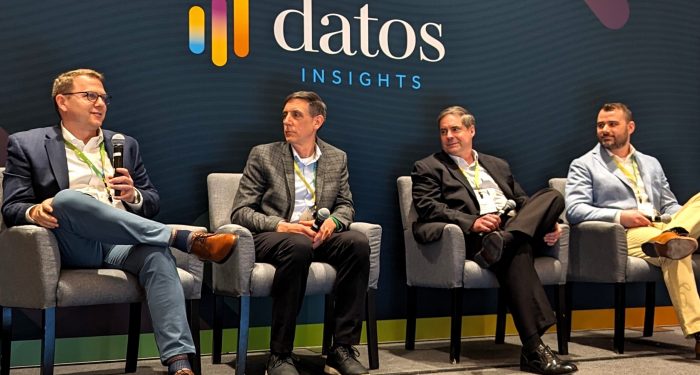
Join Mitch Wein, Executive Principal at Datos Insights, and industry leaders as they examine the build versus buy decision for AI solutions in insurance. The panel explores how carriers evaluate their unique business needs, avoid vendor lock-in, and establish clear success criteria and ROI measurement for AI initiatives. Panelists share practical insights on when to build in-house versus partner with vendors.
InsTech Insights
Exploring expert analysis and perspectives from Instech on AI and innovation in insurance – from theory to real-world impact.
Industry Events
Datos Insights hosts exclusive forums that bring together insurance technology leaders to explore AI implementation, core modernization, and digital transformation. Through our flagship Insurance Technology Conference and InsTech events, we provide unbiased research, real-world case studies, and peer-to-peer insights that drive better technology decisions.
Exponential Risk London
Join over 500 insurers, brokers, MGAs, and risk professionals to explore the future of catastrophe and exposure risk management through cutting-edge data, analytics, and modeling approaches.
Insurance Leaders Technology Forum 2026
Insurance CIOs and technology executives gain insights into AI implementation, core modernization, and organizational transformation through proprietary research and peer-validated strategies that cut through industry noise.
Our Services
We help insurance carriers transform their AI strategies through proprietary research, strategic advisory services, and implementation frameworks. Our experts provide specialized guidance for both property and casualty carriers and life, annuity, and benefits providers navigating AI adoption.
Whether you’re evaluating AI opportunities, establishing governance frameworks, building organizational capabilities, or selecting technology partners, Datos Insights provides the research and advisory support insurance carriers need to succeed.
FAQs on AI in insurance
What's the difference between predictive, generative, and agentic AI in insurance?
Predictive AI forecasts outcomes like claim severity or policyholder risk. Generative AI creates content such as policy summaries or claim narratives. Agentic AI takes autonomous actions like routing claims or triggering workflows. Each type requires different governance approaches and integration strategies. Mismatching AI types to insurance problems is a common cause of failed implementations.
How do I know if my organization is ready to scale AI?
Ask yourself: Can we explain how our AI models make decisions to regulators? Do we have processes to detect bias and hallucinations? Can our legacy systems integrate with AI tools without major rework? Is our IT team spending time on innovation or just maintaining existing systems? If you answered “no” to any of these, you likely need to address governance, infrastructure, or organizational gaps before scaling AI successfully.
What should I prioritize first: AI governance, talent development, or infrastructure modernization?
The answer depends on your current state, but successful carriers address all three simultaneously rather than sequentially. If you’re already piloting AI without governance, start there to prevent compliance issues. If pilots are failing due to legacy system constraints, prioritize modernization. If you have neither governance nor talent, begin with a readiness assessment to identify your most critical gap and build a roadmap that addresses all three in parallel.
How long does it take to see results from AI investments?
The timeline depends on your starting point and what “results” means to your organization. Some carriers see operational efficiency gains within months from targeted use cases like claims summarization. Others require longer to demonstrate ROI because they’re simultaneously building governance frameworks, upskilling teams, and modernizing infrastructure. The 53% of carriers stuck in pilots often share one thing in common: they’re trying to scale AI without addressing these foundational gaps first.
Speak to our team
Explore our advisory services and speak to our experts about how you can diversify revenue streams.