

In today’s evolving insurance landscape, AI has become a cornerstone technology for enhancing operations, improving decision-making, and delivering superior customer experiences. However, as AI systems grow more complex and business-critical, the need for governance frameworks also grows more important.
AI governance solutions fall into three distinct categories, each with pros and cons. Understanding these differences is crucial for insurance companies looking to implement effective oversight while maximizing their AI investments.
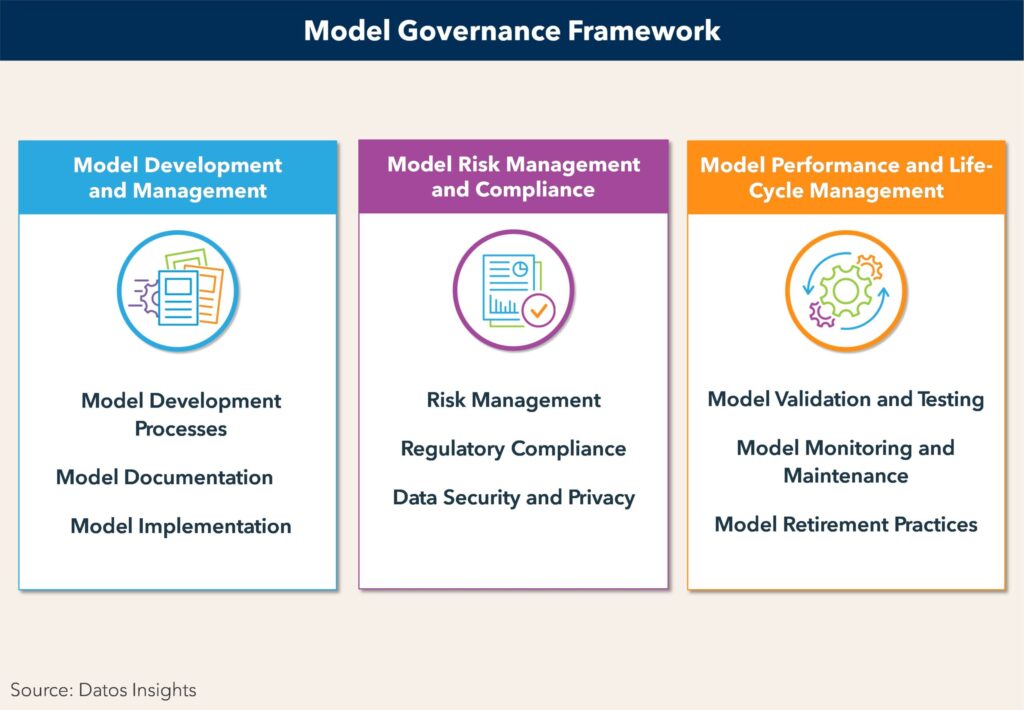
Hyperscalers and Integrated AI Platforms: Embedded Governance Within the AI Ecosystem
Major cloud providers like AWS, Google Cloud, and Microsoft Azure, alongside established AI development platforms such as DataRobot and H2O.ai, have emerged as significant players in the AI governance space. These providers offer governance capabilities embedded directly within their broader AI ecosystems.
Pros:
- Seamless integration with existing development environments
- Significantly simplified deployment processes
- Operational efficiency through consolidated vendor relationships
Cons:
- Often prioritize platform adoption over specialized governance functionality
- Potential vendor lock-in that could limit future flexibility
For many insurance carriers, particularly those in early stages of AI adoption, these integrated solutions provide adequate governance capabilities to meet basic regulatory and risk management needs. However, insurers should carefully weigh the trade-offs between convenience and specialized functionality.
Traditional AI Governance Solutions: When Insurers Need Specialized Controls
Traditional AI governance solutions build upon established practices developed for conventional predictive and analytical machine learning models. These purpose-built platforms focus exclusively on robust AI governance frameworks.
Pros:
- Superior functionality through sophisticated, specialized tooling
- Platform-agnostic implementation approaches that work across diverse AI environments
- Advanced monitoring capabilities that typically exceed what integrated platforms offer
- Comprehensive compliance frameworks designed specifically for evolving AI regulations
Cons:
- May require additional integration effort compared to hyperscaler solutions
The flexibility to operate across heterogeneous AI environments makes these solutions particularly appealing for insurance companies with complex technology landscapes or those seeking to avoid dependency on a single vendor.
GenAI Governance Providers: Managing Emerging AI Risks in Insurance
As generative AI technologies like large language models (LLMs) transform insurance operations, specialized governance solutions have emerged to address their unique challenges. These purpose-built, platform-agnostic solutions target governance specifically for generative AI.
Pros:
- Real-time LLM output monitoring
- Sophisticated hallucination mitigation mechanisms
- Comprehensive prompt management systems
- Robust content authenticity tracking
Cons:
- May require governance approaches that can adapt quickly to emerging regulations while maintaining operational flexibility
As GenAI applications proliferate across insurance operations—from customer service to fraud detection to compliance monitoring—the importance of specialized governance frameworks for these technologies will continue to grow.
Strategic Considerations for Insurers
The fragmentation of the AI governance landscape creates both challenges and opportunities for insurers. While purpose-built governance platforms currently offer superior functionality and flexibility compared to integrated solutions, market consolidation through acquisitions is rapidly reshaping competitive dynamics.
Insurance companies must consider several key factors when evaluating governance solutions:
- Complexity of AI environment: Organizations with diverse AI technologies may benefit from platform-agnostic solutions that can work across their technology landscape.
- Regulatory exposure: Insurers in highly regulated domains should prioritize comprehensive compliance frameworks specifically designed for evolving AI regulations.
- Strategic vendor relationships: The value of maintaining consolidated vendor relationships should be weighed against the potential limitations in governance capabilities.
- Future adaptability: Solutions should be evaluated not just on current capabilities but on their ability to evolve alongside rapidly changing AI technologies and regulatory requirements.
Governing AI Governance
As AI becomes increasingly embedded in core insurance operations, effective governance is essential for managing risk, ensuring compliance, and maintaining stakeholder trust. For insurers committed to responsible AI adoption, investing in the right governance approach is not merely a regulatory obligation—it’s a competitive necessity.
To learn more about the AI governance landscape and how to manage AI risk more effectively, please see our report, AI Governance: Overview and Prominent Providers.