

Fraudsters increasingly exploit the gaps between traditional controls and modern banking channels, using sophisticated techniques that combine social engineering, synthetic identities, and automated attacks. The increasing speed of payments and growing variety of digital touch points create new vulnerabilities that traditional fraud prevention approaches struggle to address.
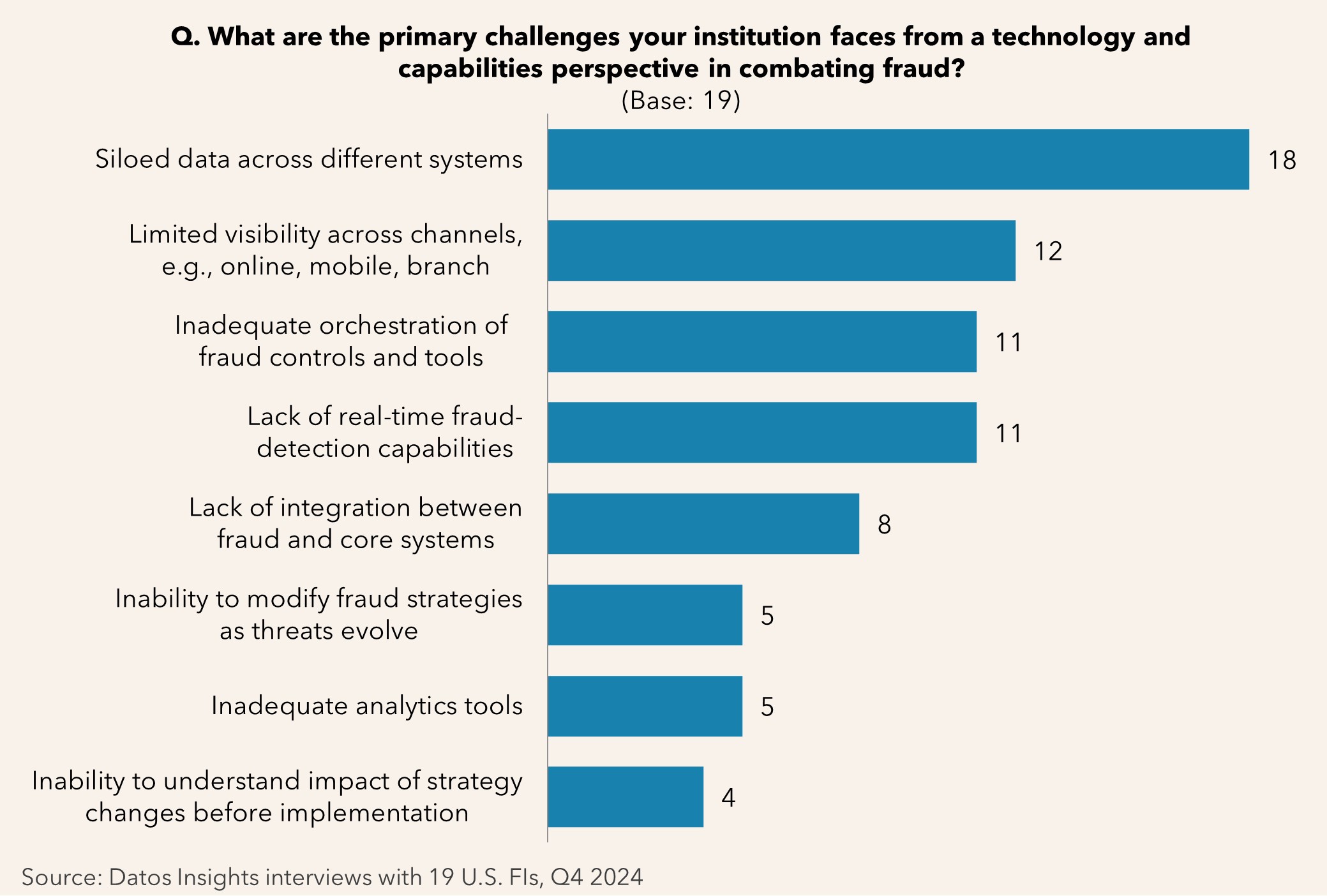
This report examines current issues, technology adoption patterns, and emerging fraud prevention and orchestration priorities. It also provides recommendations on how organizations should embark on the orchestration journey to avoid becoming increasingly vulnerable to changing fraud patterns and losing consumer trust. It is based on interviews conducted with 19 FI fraud prevention executives between November and December 2024.
Clients of Datos Insights’ Fraud & AML service can download this report.
About the Author