

The capital markets industry has reached a tipping point. Small, incremental tech updates are no longer enough. In today’s environment, where AI is evolving quickly, regulations keep changing, and clients expect instant, personalized digital experiences, legacy systems fall short. Firms that do not make a full push toward modernization risk getting left behind. The ones that are pulling ahead are those working closely with strategic consulting partners to completely rethink how they operate.
Capital Markets Face Critical Digital Transformation Pressures
The pressure is coming from all sides. Firms are dealing with regulatory changes like MiFID III and DORA. At the same time, clients expect real-time information, tailored experiences, and easy digital access. Most existing legacy systems simply cannot deliver all that. This convergence of challenges has elevated global IT consulting firms from service providers to essential enablers of survival and growth. These partnerships now determine which institutions will thrive in the digital-first era and which will struggle to keep pace with market demands.
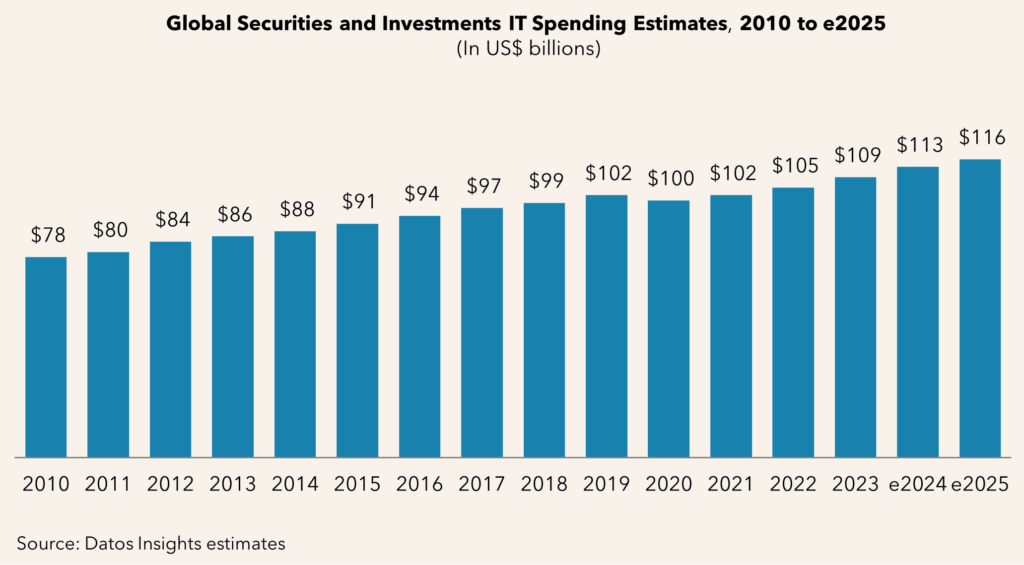
Consulting Firms Drive Critical Transformation Across Every Function
Consulting firms now play a central role in modernization efforts across capital markets. They are not just helping upgrade systems. They are helping firms build the digital foundations they need to compete. Consulting partners can embed AI workflows directly into trading, risk management, and client engagement processes, creating intelligent systems that adapt to market conditions in real-time. The entire spectrum of capital markets technology from electronic trading to post trade activities benefits by the scale, capacity, and capability offered by the service services. These consulting firms play a pivotal role in rearchitecting operating models to align with new digital realities.
By orchestrating cloud migration, agile DevOps, and enterprise data strategies, they enable institutions to break down silos and drive interoperability across functions and geographies. The result is a more responsive, resilient market infrastructure—one where analytics, automation, and AI are embedded not just as tools, but as foundational capabilities that power continuous innovation.
Data-Driven Personalization Reshapes Client Engagement
The transformation extends to how firms serve their clients. Consulting partners implement data-driven personalization engines that deliver tailored investment strategies, customized reporting, and predictive analytics. These capabilities transform generic client interactions into highly personalized experiences that drive retention and growth.
AI governance frameworks developed by consulting firms ensure these advanced capabilities operate within regulatory boundaries while maximizing business value. They create transparent, auditable AI systems that satisfy regulatory scrutiny while delivering competitive advantages through superior decision-making speed and accuracy.
RegTech Integration Turns Compliance Into Competitive Advantage
Compliance is no longer just a regulatory requirement. Done well, it can actually help firms compete. Consulting firms are leading the way by integrating RegTech solutions that automate reporting, reduce risk, and simplify complex compliance processes.
Platform consolidation initiatives led by consulting partners eliminate operational silos that plague many capital markets institutions. They create unified architectures that connect front-office trading systems with middle-office risk management and back-office settlement processes, enabling real-time visibility and control across the entire trade lifecycle.
Front and Middle Office Transformation Leads the Charge
The front office has become the primary battleground for competitive differentiation. Consulting firms help institutions deploy AI-augmented trading platforms, next-generation client relationship management systems, and unified digital workstations that consolidate research, trading, and analytics into seamless user experiences.
Middle office transformation focuses on building intelligent operational cores that support real-time decision-making and automated exception handling. These systems process vast amounts of market data while maintaining the accuracy and auditability that regulatory compliance requires.
The Consulting Partnership Imperative
Large-scale transformation is not easy. Many capital markets institutions simply do not have the in-house capabilities to handle it on their own. That is why consulting firms have become so important.
They bring a rare mix of business insight and technical expertise. They understand capital markets and also know how to implement modern cloud architecture, AI tools, and compliance systems. The most successful firms are those that combine strategic partnerships with practical execution, turning technology investment into measurable results.
Embracing Modernization Through Strategic Consulting Partnerships
The firms that will lead the capital markets industry are those that choose to modernize now. Waiting too long increases costs, adds risk, and reduces the potential upside. With AI evolving, regulations tightening, and client expectations rising, the path forward requires a bold, strategic approach.
If you want to see how leading firms are using consulting partnerships to transform their businesses, download our report, IT Services in Securities and Investments: The Global Consulting Market Landscape. It takes a deeper look at how consulting firms are reshaping the sell side, the buy side, and market infrastructure institutions worldwide.